
I’m going to say the unpopular thing first:
If your stick packs keep leaking because powder dust or sauce keeps sneaking into the seal area, “just turn up the temperature” is usually a coping mechanism—not a real fix.
In real production, seal-area contamination rarely shows up as a dramatic failure at first. It creeps in quietly.
In multi-lane stick pack production, even a 0.3–0.8% increase in seal failure rate can translate into thousands of rejected packs per shift, which is why contamination-related leak issues often become economically visible only after lines reach real production speed.
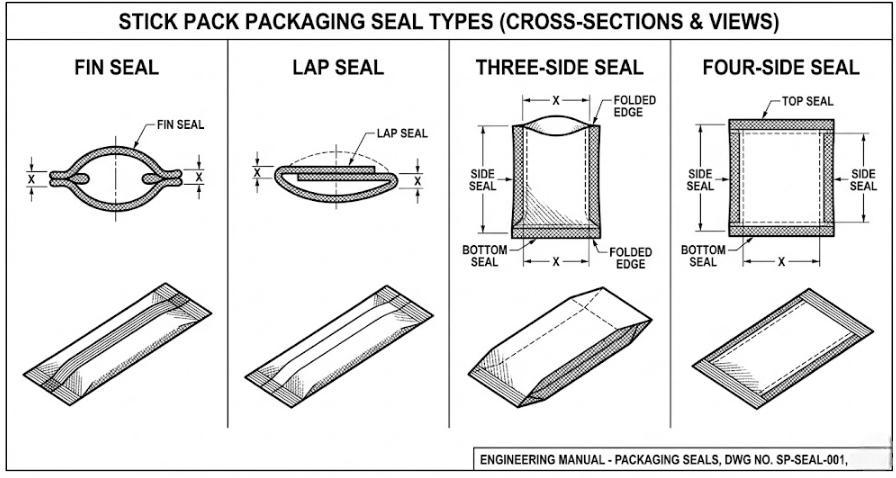
In those scenarios, ultrasonic sealing often turns out to be the cleaner, more forgiving solution.
Heat sealing, on the other hand, remains the king when your film, process window, and line discipline are truly dialed in.
So which one should you choose?
It comes down to a single, brutally honest question:
Is your biggest enemy seal-area contamination, or is it maintaining a tight, repeatable heat-seal window?
Below is the same framework I use when talking to plant engineers who are tired of guessing and re-running trials.
| What you’re really worried about | Ultrasonic sealing | Heat sealing |
|---|---|---|
| “My seal area gets messy—will it still close?” | Designed to tolerate residue in the seal area; vibration can help displace product from the sealing interface in many applications. | Typically requires a clean seal area; residue blocks heat transfer and creates leak channels. |
| “Do I need long dwell time?” | Very short sealing cycles in many real installations. | Dwell time is a core control variable; too short or too long directly hurts seal integrity. |
| “What am I actually tuning?” | Amplitude, pressure, time, and tooling—validated per film and product. | Time, temperature, and pressure are tightly coupled; changing one usually forces adjustment of the others. |
In typical stick pack applications, ultrasonic sealing cycles are often reported in the 100–300 millisecond range, allowing consistent sealing at higher line speeds without relying on extended dwell time.
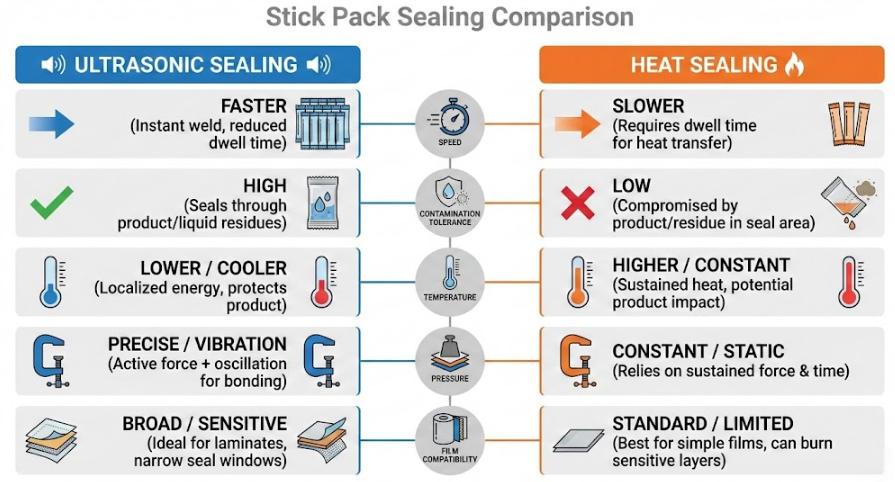
That “milliseconds framing” isn’t marketing fluff—it reflects what buyers start caring about once line speed and lane count expose the limits of dwell-based sealing.
Heat sealing is fundamentally about:
Melting or activating the sealant layer + pressure + enough contact time, followed by cooling so the bond survives handling and distribution.
The trap many teams fall into is treating heat sealing as “set temperature and forget it.”
In reality:
Time (dwell), temperature, and pressure are interdependent
Adjusting one almost always forces changes in the others
The usable process window is often narrower than expected
Most failures aren’t dramatic—they’re small mismatches that only surface at speed:
Dwell too short: Heat never fully activates the sealant layer, especially as line speed increases
Temperature too high: Film distortion, burn-through, cosmetic defects, and a fragile process window
Uneven pressure: Micro-channels form, creating slow leaks that escape detection until customers complain
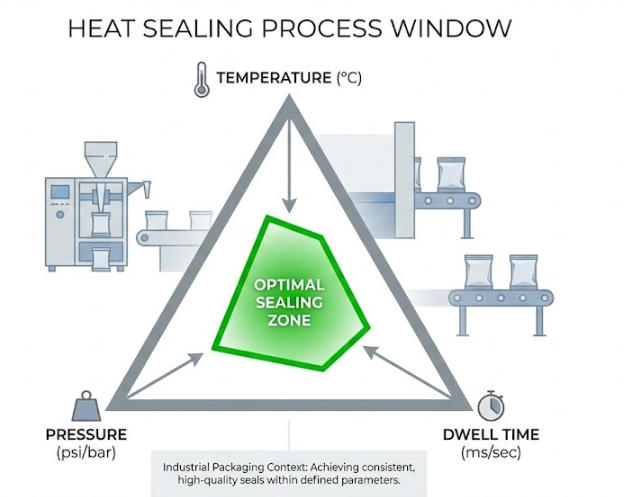
When your process is clean and your laminate is stable, heat sealing is predictable, well understood, and easy to validate. When contamination enters the picture, it becomes unforgiving.
Ultrasonic sealing uses high-frequency mechanical vibration so heat is generated inside the material at the seal interface, rather than being transferred from a hot jaw through the film.
That distinction matters because:
Energy is localized where bonding happens
Seal formation depends less on external heat transfer
Residue in the seal area is less likely to completely sabotage the bond
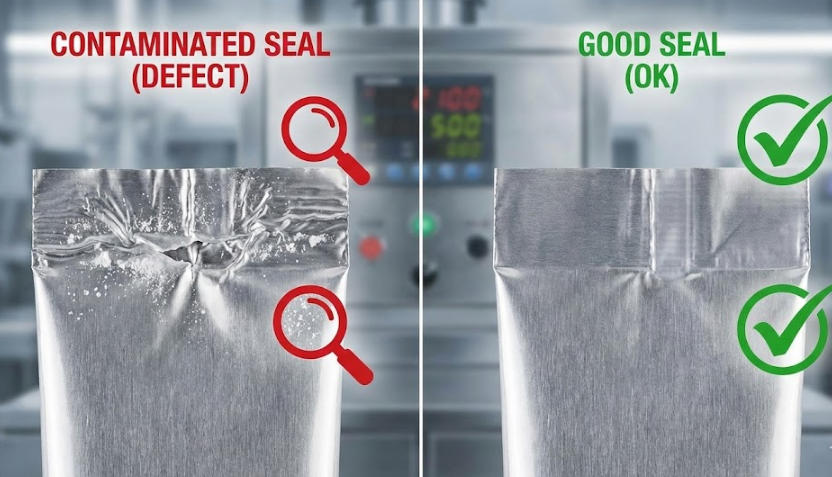
This is why ultrasonic sealing keeps showing up in powder-heavy and messy-fill applications—not because it’s magical, but because it’s more tolerant of real-world conditions.
It’s real—but conditional.
Industry application notes consistently show that ultrasonic sealing can reduce leak-related rejects by 30–70% in powder and viscous-liquid stick pack lines when seal-area residue is the dominant failure mode, though it does not eliminate the need for basic process control.
That last part matters.
Ultrasonic sealing reduces sensitivity to contamination; it does not excuse poor filling control, unstable films, or aggressive over-speeding.
Speed turns “minor” problems into expensive ones.
At 6, 8, or 10 lanes:
A small leak rate multiplies across lanes
Minutes of unstable sealing turn into thousands of bad packs
“We’ll catch it later” becomes customer complaints
Powders make this worse. Dust floats, migrates, and lands where it shouldn’t. Seal integrity quietly degrades until the economics force attention.
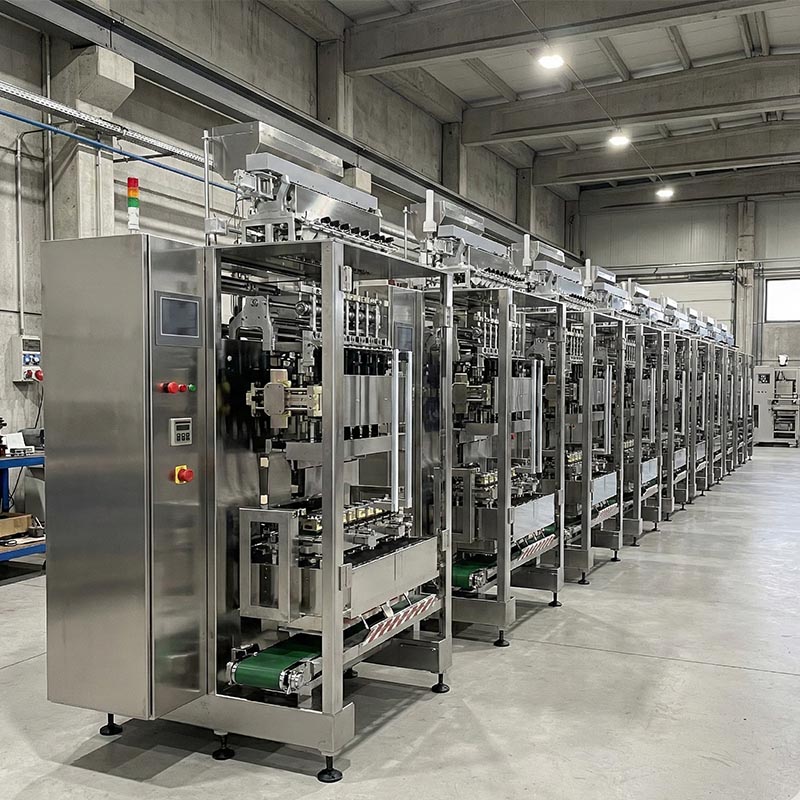
That’s why ultrasonic sealing earns its reputation in electrolyte, coffee, collagen, and seasoning applications—it keeps sealing when the seal area isn’t pristine.
If your product is clean and your laminate supplier delivers a stable sealant layer, heat sealing remains the workhorse. You can tune it, validate it, and control it properly—without relying on what engineers jokingly call vibes-based engineering.
These observations come from configuring and supporting multi-lane stick pack systems for powders and liquids, where seal-integrity issues typically surface only after lines reach real production speeds—not during low-speed trials.
If you’re evaluating machine builders, treat blogs as how they think, and operational updates as what they actually ship.
On our side, project and system updates are published in the company news section, which gives buyers a clearer picture of real-world configurations, response speed, and engineering focus:
https://foodbaggingmachine.com/company-new.html
Sealing choices are rarely made in isolation—they’re usually evaluated alongside lane count, filling behavior, and stick pack machine layout.
Choose ultrasonic sealing if:
Seal-area contamination is a recurring reality
You run powders, sticky liquids, or messy fills
Leaks cost you rework, downtime, and customer trust
Short sealing cycles matter at high lane counts
Choose heat sealing if:
You can control cleanliness, film quality, and jaw pressure
Your laminate supplier provides a stable seal window
You want a widely understood, easily validated process
Don’t guess.
Run trials on your actual laminate, at your real line speed, with your actual product dustiness or viscosity. That’s where the truth lives.
Contact: LTC Bagging System
Phone: +8613337332946
E-mail: [email protected]
Add: Wenzhou, Zhejiang Province, China