Picture this: A coffee lover walks into a specialty store, scans the crowded shelf, and stops at your bag. The coffee inside is still as aromatic as the day it was roasted—three months ago. That's the power of the right packaging.
For coffee roasters, packaging isn't just a container. It's a freshness system, a brand billboard, and often the deciding factor in whether customers come back for more. Your beans might be exceptional, but if they arrive stale or your packaging looks amateur next to competitors, you've already lost.
Quad seal bags have become the go-to choice for premium coffee brands because they solve multiple problems at once: they protect flavor aggressively, stand tall on shelves without toppling, and offer four uninterrupted panels for eye-catching branding. This article breaks down exactly why this packaging format is taking over the coffee industry—and whether it's right for your business.To achieve consistent filling accuracy and sealing quality, many roasters pair quad seal bags with an automated quad seal bag packing machine.
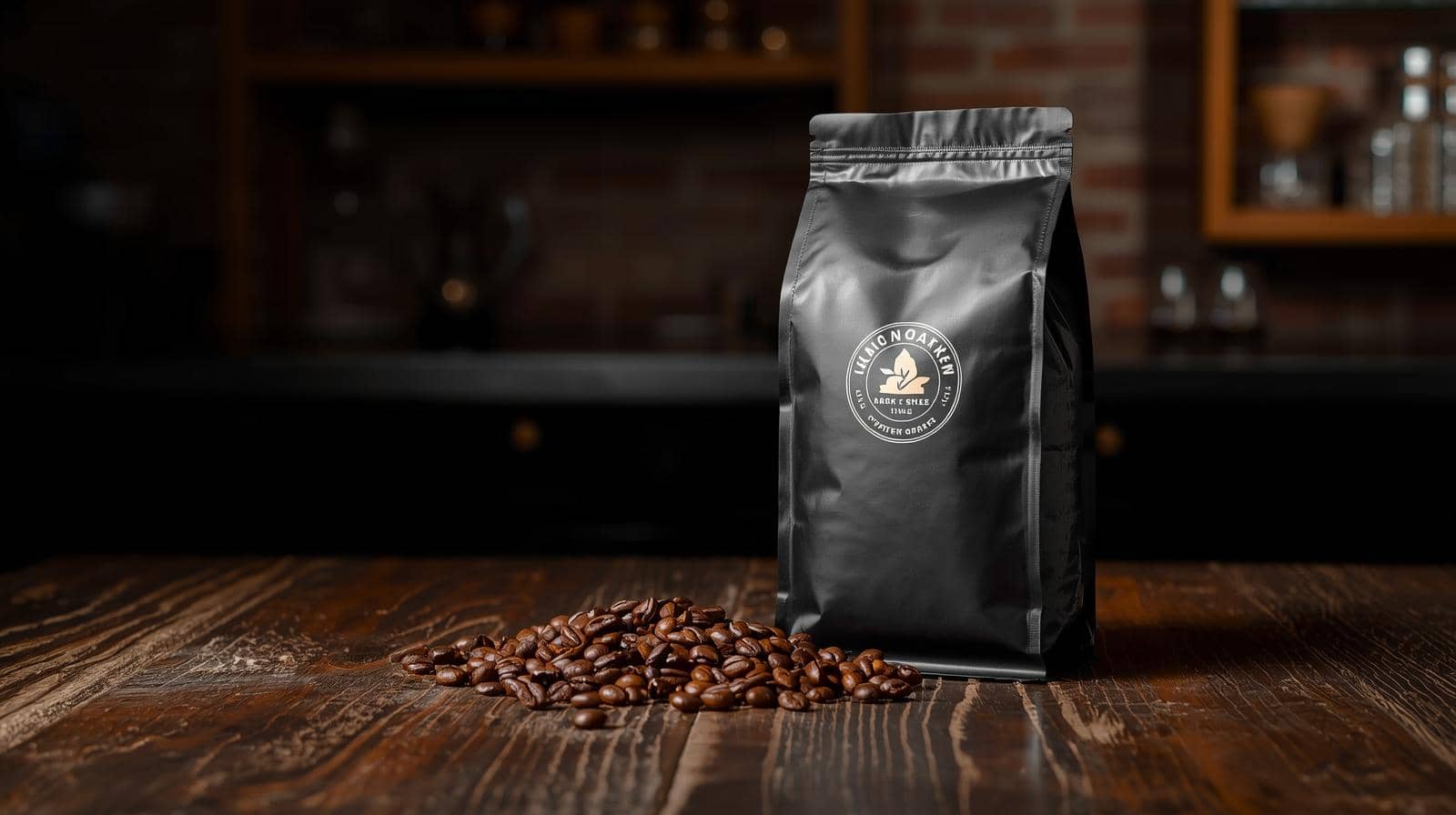
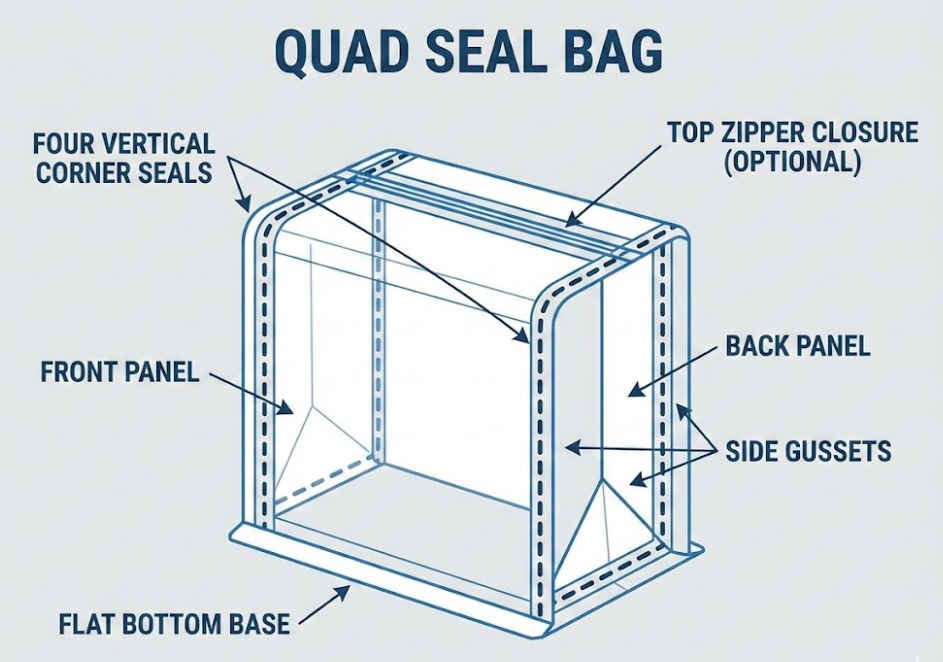
Here's what makes quad seal bags different: four vertical seals, one at each corner, instead of the single back seal you see on standard pouches. This corner-seal design creates a box-like shape that stands upright without support, making it easier to fill with roasted coffee and more secure for retail display.
Think of it as packaging that combines the stability of a box with the flexibility of a pouch. When you fill these bags with coffee, they don't slump or tip over. They stand at attention.
These bags are typically made from multi-layer laminates—combinations of materials like PET (polyester), aluminum foil, and PE (polyethylene)—that provide superior barrier properties against moisture, oxygen, and light.
The manufacturing process allows seamless integration of features that matter most to coffee packaging:
One-way degassing valves (to release CO₂ without letting oxygen in)
Resealable zippers (so customers can maintain freshness after opening)
Easy-tear notches (because nobody likes struggling with scissors)
For brands aiming for higher output, barrier bags are typically used together with a dedicated coffee packaging machine to maintain packing efficiency and product integrity.
While quad seal bags are considered the gold standard for coffee—especially for pack sizes between 500g and 20kg—they're also widely used for pet food, nuts, and sports nutrition products that need premium presentation and durability.
Walk down the coffee aisle at Whole Foods or your local specialty shop. Those professional-looking bags that stand perfectly straight? Most are quad seal format.
Coffee beans are notoriously finicky. Upon roasting, coffee beans release approximately 2 liters of CO₂ per 100 grams—a process called degassing that continues for weeks. This creates a packaging nightmare: too much trapped CO₂ causes bags to burst, but letting gas escape opens the door to oxygen, which kills flavor.
Meanwhile, exposure to oxygen causes coffee to undergo oxidative degradation where volatile aromatic compounds break down and bitter, stale flavors develop. Moisture absorption accelerates this process. Light breaks down the acids that give coffee its bright, complex notes.
You need packaging that handles all these threats simultaneously while looking premium enough to justify your price point.
This is where quad seal bags earn their reputation. When constructed with high-barrier materials like PET/aluminum/PE laminates, these bags can achieve oxygen transmission rates (OTR) below 0.1%, which is the threshold for preserving coffee freshness long-term.
For context, that OTR level means your beans can maintain their "just roasted" flavor profile for 6-12 months unopened. Standard pouches with basic materials? You're looking at weeks, not months.
The aluminum layer is particularly crucial. Foil laminated bags provide the lowest oxygen and light transmission rates, making them the recommended choice for coffee packaging that needs extended shelf life.
If you're upgrading to high-barrier materials, consider matching them with a precision coffee filling machine to maintain dosing consistency.
Here's a problem most roasters don't think about until it's too late: bags that tip over in transit or slump on shelves. The four-seal design provides structural reinforcement that allows the bag to stand upright reliably, even when only partially filled.
This stability matters in three ways:
Retail display: Your bags look professional and stay visible to customers
Efficient packing: They fit neatly into shipping cartons without wasted space
Warehouse storage: Bags can be stored upright without falling over
With four flat panels available for design—front, back, and two side gussets—quad seal bags offer extensive surface area for branding and product information. There's no back seal interrupting your design. Every angle is a marketing opportunity.
This matters more than you might think. In specialty coffee, where customers spend 30-60 seconds examining bags, you need every panel working to tell your story. Origin information on one side, brewing instructions on another, your brand story on the back—you have room for all of it.
When coffee beans are roasted, they release carbon dioxide gas continually for 7+ days, and without a degassing valve, accumulated CO₂ can cause bags to burst, exposing coffee to oxygen and moisture.
A quality valve does two things:
Lets CO₂ escape (preventing bag bursting and bloating)
Blocks oxygen from entering (preventing oxidation)
Without this feature, you're forced to either wait several days before packaging (losing sales time) or risk bag failures that damage your brand reputation.
Resealable zippers provide consumers a simple way to maintain coffee freshness after opening while keeping the package looking neat and professional.
Most customers don't finish a bag of coffee in one sitting. They open it, use some, and reseal it. If your bag doesn't have an effective closure, those beans start going stale within days. Tin ties work but feel cheap. Zippers feel premium and actually work.
The result? Customers who enjoy consistently fresh coffee from first cup to last, which translates to repeat purchases and positive reviews.
The flat surfaces of quad seal bags are perfect for high-resolution printing. Brands can incorporate logos, product information, brewing instructions, and design elements in up to 10 colors with matte or glossy finishes to create unique, recognizable packaging.
Think about what this enables:
High-resolution photography of beans, farms, or brewing scenes
QR codes linking to roasting videos or brewing guides
Transparent windows (if you want customers to see the beans)
Embossed textures that make your bags feel premium
Your packaging is often the first—and sometimes only—direct interaction customers have with your brand. Make it count.
Standard stand-up pouches are the industry workhorse: cost-effective and widely available. But quad seal bags provide superior strength and stability compared to standard stand-up pouches, with the ability to maintain an upright position even when partially filled.
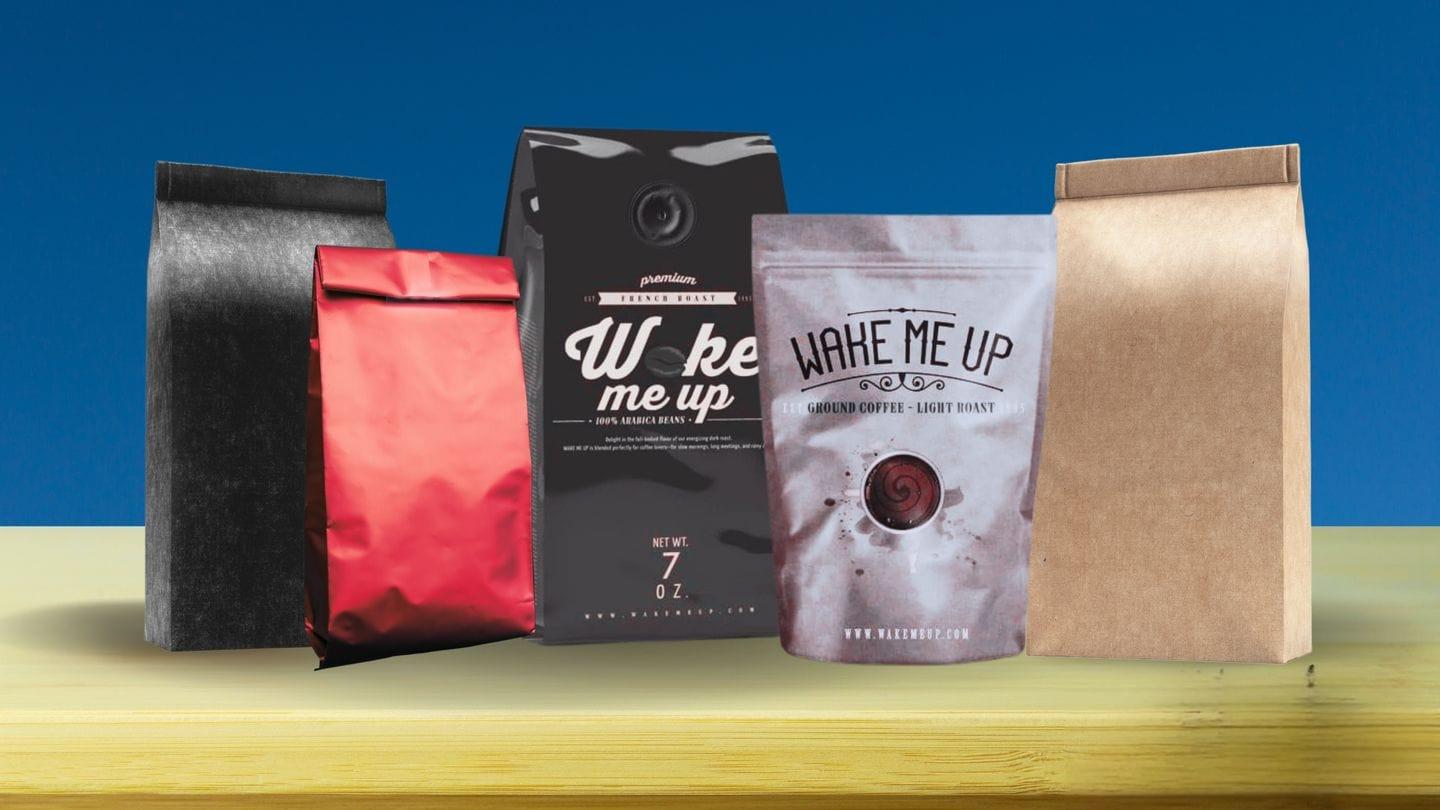
When to choose stand-up pouches:
You're just starting and need to minimize costs
Your volumes are small (under 250g)
You sell primarily through farmers markets or direct channels where shelf presence matters less
When to choose quad seal:
You're wholesaling to retailers (shelf presence is critical)
You package 500g or more (larger volumes need structural support)
Your brand positioning is premium or specialty
This comparison confuses people because the terms are often used interchangeably. Both quad seal (also called box bottom or block bottom) and flat bottom bags have a flat base that allows them to sit flush on retail shelves, with five panels for design.
The technical difference is subtle and varies by manufacturer. In practice, they solve the same problems and offer similar benefits. Focus on finding a supplier who can deliver the specific features you need—material barrier, valve quality, print resolution—rather than worrying about terminology.
| Feature | Quad Seal | Stand-Up Pouch | Paper Bags with Tin Tie |
|---|---|---|---|
| Shelf Stability | Excellent - stands firmly even when partial | Good - needs to be fairly full | Poor - tips easily |
| Barrier Protection | Excellent - multi-layer films achieve <0.1% OTR | Good to Excellent - depends on materials | Minimal - porous to oxygen |
| Branding Surface | Four full panels, no back-seal interruption | Good - front and back panels | Limited - paper accepts basic printing |
| Typical Shelf Life | 6-12 months | 3-9 months | Days to weeks |
| Cost per Bag | $0.20-$0.60 (depending on size/features) | $0.10-$0.30 | $0.05-$0.15 |
| Best Use Case | Retail, wholesale, premium positioning | General retail, entry-level brands | Farm-to-table, immediate consumption |
If you are selecting both bags and equipment together, explore our quad seal bag packaging solutions to ensure material and machine compatibility.
250g (8-9oz): Retail sweet spot for home consumers. Typically consumed within 2-3 weeks after opening, which aligns with optimal freshness.
500g (1lb): The traditional "pound of coffee" size. Popular with dedicated coffee drinkers who go through a bag in 10-14 days.
1kg (2.2lb): Preferred by cafes, offices, and bulk buyers. Requires excellent barrier materials since the bag will be open longer.
5kg and up: Wholesale only. These require industrial-grade construction and are typically used for café supply.
For coffee packaging requiring extended shelf life, foil laminated barrier bags are recommended because they provide the lowest oxygen and light transmission rates.
Standard high-barrier (PET/AL/PE):
Oxygen transmission: <0.1 cc/m²/day
Shelf life potential: 12+ months
Cost: Mid-range
Best for: Most specialty and retail coffee
Sustainable alternatives (Kraft paper composites, recyclable films):
Oxygen transmission: 0.5-2.0 cc/m²/day
Shelf life potential: 6-9 months
Cost: Higher initially, brand value offset
Best for: Eco-conscious brands willing to educate customers about faster consumption
While sustainable coffee bags are increasingly available, achieving barrier performance comparable to traditional materials remains a challenge, particularly for extended shelf life requirements.
Valves:
Standard metal valves: $0.03-0.05 per valve
Premium self-adhesive valves: $0.08-0.12 per valve
Choose premium for bags over 500g or high-end positioning
Closures:
Standard zipper: Adds $0.05-0.08 to bag cost
Tin tie: Adds $0.02-0.03, but feels less premium
Combination (zipper + tin tie): Belt-and-suspenders approach for premium lines
Request samples from 2-3 suppliers (most offer free plain samples)
Test with your coffee: Fill, seal, and monitor for 2-4 weeks
Design your artwork: Remember you have four panels to work with
Order a print proof: $150-250 for customized sample with your artwork
Production order: Typical MOQ is 10,000-15,000 units for full custom rotogravure printing
If you would like to test quad seal bags with your own beans, you can request free samples through our coffee packaging consultation service.
Entry-level stand-up pouch with basic features: $0.10-0.15 per bagQuad seal bag with valve and zipper: $0.20-0.40 per bagPremium quad seal with all features: $0.40-0.60 per bag
That 15-30 cent difference per bag might seem significant until you factor in:
Reduced returns/complaints from stale coffee
Premium positioning allowing higher retail prices ($2-4 more per bag)
Shelf presence leading to higher sell-through rates
Brand perception that drives customer loyalty
✅ You should choose quad seal bags if:
You're selling through retail channels (grocery, specialty shops)
Your price point is $15+ per pound
You need shelf life beyond 6 months
Brand image and professional appearance matter to your positioning
You're doing 500g+ package sizes
❌ Stick with simpler options if:
You only sell direct at farmers markets or your café
Your turnover is extremely fast (coffee sells within 2 weeks)
You're testing the market with small batches
Budget constraints are severe and you need to minimize every penny
Q: Do quad seal bags actually keep coffee fresher than other options?
Yes, but the material matters more than the structure. Bags with high-barrier materials like foil laminates that achieve oxygen transmission rates below 0.1% will keep coffee fresh significantly longer—regardless of whether they're quad seal or flat bottom. The quad seal design adds structural benefits but the barrier materials do the heavy lifting on freshness.
For consistent freshness across production runs, many roasters use a coffee bagging machine that integrates both nitrogen flushing and valve application.
Q: Can I reseal quad seal bags after opening?
If you add a zipper, absolutely. Quad seal gusseted bags with zippers provide reliable resealing ability without needing tin ties or bag clips. The zipper is built into the bag structure during manufacturing. Without a zipper, you'll need an external closure method like a tin tie.
Q: What size should I choose for retail vs. wholesale?
For retail consumer sales, 250g-500g sizes are standard, while wholesale packaging for cafes typically uses 1kg sizes or larger. Think about consumption patterns: home users want portions they'll finish in 2-3 weeks, while commercial buyers prioritize bulk efficiency.
Q: Are sustainable options available for quad seal bags?
Yes, but with trade-offs. PCR (post-consumer recycled) and recyclable quad seal bags are now available, along with kraft paper and mono-material options. However, these typically offer slightly lower barrier performance than traditional foil laminates. Work closely with your supplier to balance sustainability goals with freshness requirements.
Q: What's the minimum order quantity for custom printing?
Most suppliers require 10,000-15,000 bags for full custom rotogravure printing (the high-quality multi-color process). However, digital printing options now allow for lower MOQs of 500-1,000 bags, which is ideal for testing new designs or limited-edition releases. Digital printing costs slightly more per bag but eliminates the need for expensive printing plates.
Quad seal bags have earned their reputation in the specialty coffee industry by solving the trifecta of freshness preservation, shelf presence, and branding opportunity. They combine superior strength, stability, and extensive surface area for branding, making them ideal for products like coffee that require both premium shelf presentation and high-barrier protection.
The real question isn't whether quad seal bags are technically superior—they are. The question is whether the benefits justify the cost for your specific business model. If you're selling premium coffee through retail channels, need shelf life measured in months rather than weeks, and want packaging that elevates your brand positioning, the answer is almost certainly yes.
Start with samples from two or three suppliers. Fill them with your coffee. See how they perform. Talk to your customers about what they value. The right packaging decision becomes clear when you test it in real-world conditions.
Ready to elevate your coffee packaging?
We provide complete quad seal bag solutions including material selection, custom printing, and automated packing equipment.
Request free quad seal bag samples
Get a customized coffee packaging recommendation
Download a full coffee packaging workflow PDF
Explore our coffee bag packaging equipment
If you're ready to upgrade your packaging, contact us and our team will help you choose the right bag, machine, and configuration.
Contact: LTC Bagging System
Phone: +8613337332946
E-mail: [email protected]
Add: Wenzhou, Zhejiang Province, China