If you are short on time, here is the core distinction:
Choose Paper Bag Packaging: If your product is dry, has a short shelf life (e.g., fresh bakery, fast food), or your brand positioning relies heavily on "organic/natural" messaging. Modern paper often requires liners to be functional.
Choose Plastic Bag Packaging: If your priority is maximizing shelf life, preventing moisture/oxygen ingress (e.g., frozen foods, liquids, meat), or minimizing logistics costs per unit.
The Hybrid Solution: Many manufacturers now opt for composite bags (Paper + PE/PLA liner) to balance aesthetics with function.
PS: If you are considering multi-layer or composite paper bags (Doypacks), you will need versatile equipment. Our
Before comparing materials, we must address the critical factors driving procurement decisions this year.
Barrier Protection: Can the material stop oxygen and moisture?
Food Safety: Are there risks of chemical migration (PFAS)?
Brand Perception: Does the package signal "premium" or "wasteful"?
TCO (Total Cost of Ownership): Beyond the bag price, what about shipping and breakage?
Machine Compatibility: Can your current VFFS or HFFS lines run the new material?
Sustainability & Brand Image: Paper is widely perceived as the "hero" of sustainable packaging. It is biodegradable and recyclable, which resonates with the 67% of consumers who view paper packaging as having higher value.
Regulatory Alignment: Paper faces fewer bans than single-use plastics in many jurisdictions.
Poor Barrier Properties: Untreated paper is porous. It cannot effectively seal in aroma or seal out moisture/grease without assistance.
Logistics Footprint: Paper is heavier and bulkier. Transporting paper bags generates a higher carbon footprint per unit compared to ultra-thin plastic films.
To overcome barrier issues, modern paper packaging often uses:
Liners: Bioplastics (PLA) or PE coatings.
Coatings: Water-based dispersion coatings to resist grease without using traditional plastics.
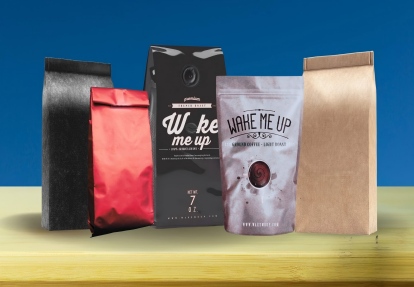
Superior Barrier: Plastic films (especially multi-layer co-extrusions) provide excellent protection against oxygen, moisture, and light, significantly extending shelf life.
Cost & Efficiency: Plastic is incredibly lightweight. 1,000 plastic bags weigh significantly less than 1,000 paper bags, reducing fuel consumption during transport.
Public Perception: "Plastic" is often a dirty word in consumer marketing, despite its functional benefits.
Chemical Concerns (PFAS): Recent investigations have highlighted risks of PFAS ("forever chemicals") in certain plastic films and even coated paper. Ensuring your supplier provides PFAS-free certification is now a critical compliance step.
To make an engineering-grade decision, compare these physical attributes:
| Feature | Paper Packaging | Plastic Packaging |
| Durability | Low (prone to tearing/punctures) | High (flexible and tough) |
| Moisture Barrier | Poor (absorbs water unless coated) | Excellent (waterproof) |
| Weight (per 1000 units) | Approx. 140 lbs (high bulk) | Approx. 15 lbs (efficient) |
| Breathability | High (good for some produce) | Low (good for preservation) |
| Visuals | Matte, Natural, "Artisanal" | Glossy, Clear (product visibility) |
Different food products demand different environments. Use this matrix to guide your selection:
| Food Category | Recommended Material | Machine & Bag Strategy |
| Fresh Bakery | Paper (Micro-perforated) | Breathability preserves crust crispness. |
| Coffee Beans | Composite / Foil-Lined | Requires a one-way valve and high barrier. |
| Frozen Food | Plastic (PE/PA) | Must withstand sub-zero temps without cracking. |
| Powders/Spices | Plastic or Lined Paper | Must prevent clumping. For automated packing, check our |
| Snacks/Chips | Metalized Plastic | Essential for light blocking and crispness. |
Your choice of material dictates your machinery. Buying the wrong material for your machine is a costly mistake.
If you are using plastic film rolls or composite rolls for high-speed production (e.g., chips, candies), Vertical Form Fill Seal (VFFS) machines are the standard. They form the bag from the roll.
Recommended Tech:
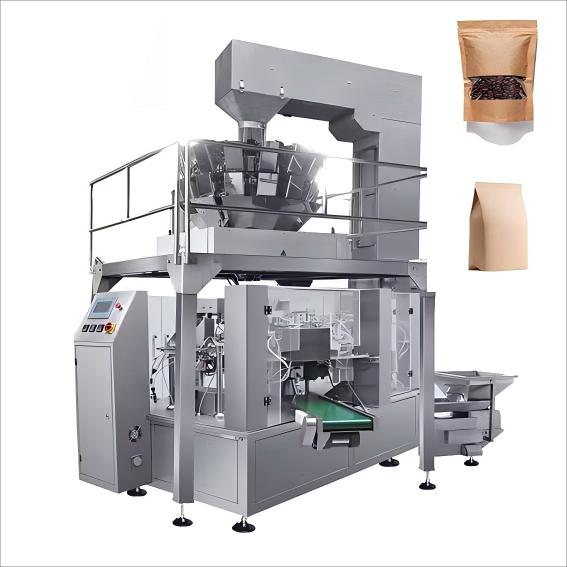
If you choose high-quality paper bags, stand-up pouches (Doypacks), or bags with zippers/valves, a Premade Pouch Packing Machine is the better choice. It picks up pre-made bags, opens, fills, and seals them. This ensures the aesthetic integrity of the paper is maintained without wrinkling.
Recommended Tech:
When calculating Total Cost of Ownership (TCO), look beyond the unit price:
Material Unit Cost: Plastic bags generally cost 1–5 cents, while paper bags range from 5–25 cents.
Storage & Logistics: You need significantly more warehouse space for paper bags due to their bulk.
Hidden Costs: Consider the cost of product spoilage. If a paper bag fails to protect your product from humidity, the cost of returns will far outweigh the savings on packaging.
Brand ROI: 41% of consumers are willing to pay more for sustainable packaging. If paper allows you to increase your retail price, the higher material cost is justified.
In 2026, compliance is non-negotiable.
FDA & EU 1935/2004: Ensure your material has a Declaration of Compliance (DoC) for food contact.
PFAS Regulations: With bans in places like California and Denmark (limit <20ppm), you must test for PFAS, especially in grease-resistant paper coatings.
Traceability: Modern consumers demand transparency. We recommend integrating smart coding systems. Read more on
Follow this flow to make your final decision:
Product Audit: Is it wet, dry, oily, or frozen?
Shelf Life Target: >6 months (Plastic/Composite) or <1 week (Paper)?
Supply Chain: Will it face rough handling? (Plastic is tougher).
Budget: Calculate TCO, not just bag price.
Validation: Request samples and run a test on your machine.
Need help validating your material? At LTC PACK, we offer machine trials to ensure your chosen paper or plastic bag runs smoothly on our equipment.
There is no "better" choice between paper and plastic—only the right choice for your specific product.
For high-barrier, long-life, and cost-efficiency, plastic or composite films remain superior.
For bakery, immediate consumption, and eco-branding, paper is the clear winner.
The key to success in 2026 is matching your material to the right automation technology.
Ready to upgrade your packaging line?
Get a customized proposal that matches your bag type to the perfect machine.
Q: Can paper bags be used for oily or wet foods?
A: Generally, standard paper bags require an additional liner or coating (such as PE, PLA, or a grease-resistant aqueous coating) to handle high-grease or wet foods safely. Always verify the material's food contact certification.
Q: Is plastic always less eco-friendly than paper?
A: Not necessarily. Plastic is often lighter and more energy-efficient to manufacture and transport, resulting in a lower carbon footprint in logistics. However, its low recycling rate and "microplastic" issues affect its overall sustainability score. The best choice depends on your specific lifecycle analysis.
Q: I need a long shelf life. Should I choose paper or plastic?
A: For long shelf life requiring protection against moisture and oxidation, composite films or plastic/aluminum laminates are recommended. Paper can be used but only if it is laminated with a high-barrier liner.
Q: How do I know which machine to use: VFFS or Premade Pouch?
A: If you use roll stock film and need high speed/lower material cost, VFFS is preferred. If you use high-quality, pre-printed paper bags or stand-up pouches with zippers, a Premade Pouch Machine is the best choice to maintain bag aesthetics.
Contact: LTC Bagging System
Phone: +8613337332946
E-mail: [email protected]
Add: Wenzhou, Zhejiang Province, China