We still remember the first conversation clearly.
The owner of a fast-growing snack company reached out to us with what sounded like a familiar problem—but the urgency in his voice told us this time was different. Orders were increasing every month, retail partners were asking for higher volumes, and yet the packaging line had become the one thing holding everything back.
“Production isn’t the issue,” he said. “Packaging is.”
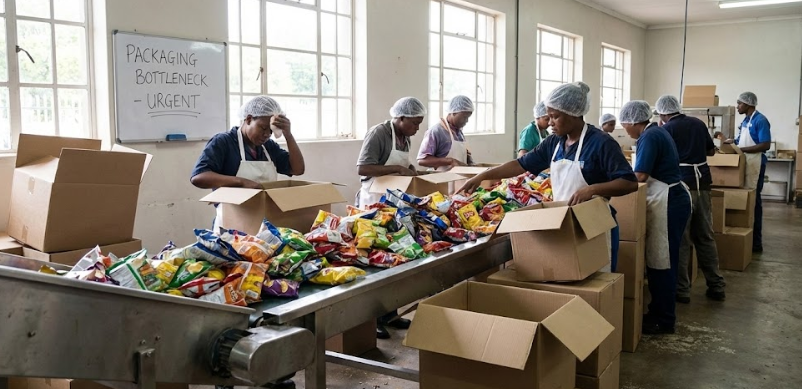
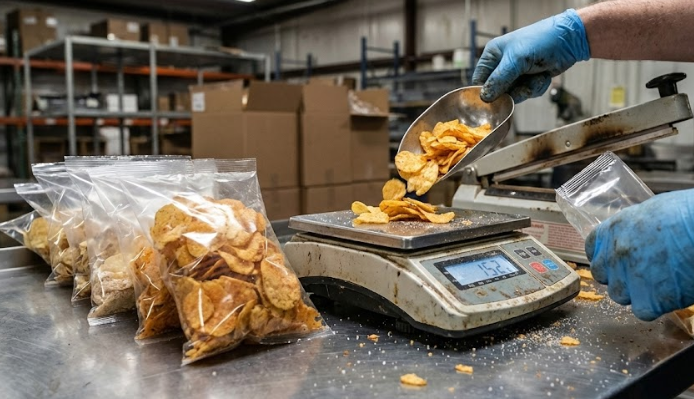
At that point, the company was still relying heavily on manual weighing and bagging. What had worked perfectly well in the early days—small teams, flexible output, low overhead—was now becoming a bottleneck. Packaging speed fluctuated from shift to shift, labor costs were rising, and inconsistent sealing was starting to affect product appearance on the shelf.
For a growing snack brand, those are warning signs that can’t be ignored.
From our initial assessment, it was clear that demand was no longer the problem. Our role was not just to supply equipment, but to analyze the existing line, identify the true packaging constraint, and design a packaging solution that could support the company’s current output while allowing room for future growth.
The company had a strong product-market fit, stable distribution channels, and a loyal customer base. The real issue was that packaging throughput simply couldn’t keep pace with upstream production.
Manual weighing and bagging slowed the entire line. During peak periods, output depended almost entirely on how many trained workers were available that day. Even small variations—fatigue, shift changes, product breakage—had an immediate impact on daily production numbers.
We see this pattern often in small snack companies. Packaging works—until it suddenly doesn’t.
The company initially considered hiring more staff to solve the problem. On paper, it seemed like the fastest fix. In reality, it introduced new risks.
More workers meant higher and less predictable labor costs. Training new operators took time, and turnover made consistency difficult to maintain. Most importantly, adding people did not address the root cause: the packaging process itself was no longer designed for the volume the business was trying to achieve.
At this stage, simply “working harder” was no longer an option.
In many snack factories, packaging becomes the first major constraint as the business grows. Upstream processes—frying, baking, seasoning—are often easier to scale. Packaging, however, relies on repetitive, precision-based tasks that are difficult to accelerate manually without compromising accuracy or quality.
This snack company was no exception.
As output pressure increased, packaging consistency started to suffer. Seal quality varied, bag appearance was uneven, and rework became more frequent. These issues might seem minor at first, but for branded snack products, they directly affect shelf appeal and customer trust.
This is why, in many of the projects we work on, packaging is the first area where automation delivers measurable returns. Not because automation is trendy—but because it directly stabilizes speed, quality, and labor dependence at the same time.
For this snack company, that realization marked the turning point.
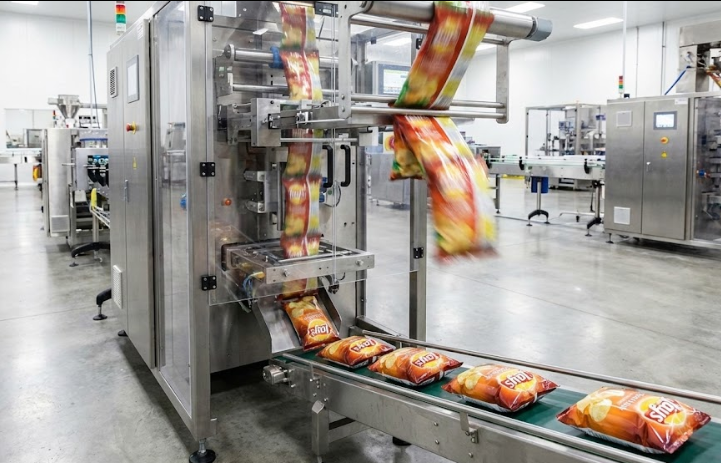
Before automation, the packaging line typically handled 25–30 bags per minute, depending on operator availability and shift conditions.
After implementing the automated weighing and bagging solution, stable output increased to 55–60 bags per minute, with far less variation between shifts. This allowed the company to nearly double packaged output without expanding floor space or adding production hours.
Before automation, daily output depended heavily on staffing levels and shift conditions. After the new packaging system was in place, production became consistent across shifts, even during peak demand periods.
Without expanding the factory or adding new production rooms, the company was able to significantly increase packaged output simply by removing the packaging bottleneck. The upstream processes were no longer forced to slow down or wait for packaging to catch up.
For the client, this meant something very practical: they could confidently accept larger orders without worrying whether packaging would become the limiting factor again.
One of the most common misconceptions about automation is that it simply “replaces people.” What we observed here was different.
The automated packaging line reduced the need for repetitive manual tasks such as weighing, bagging, and sealing. At the same time, existing staff were reassigned to roles that required oversight, quality checks, and line coordination—areas where human judgment actually adds value.
Instead of constantly reacting to labor shortages, the company gained a more stable and manageable operation. Overtime dependence dropped, training became easier, and daily planning became far more predictable.
Beyond efficiency, packaging quality improved noticeably.
Bag weights became more uniform, seals more consistent, and finished products looked cleaner and more professional on the shelf. This might seem like a small detail, but for branded snack products, consistency plays a critical role in customer perception and retailer confidence.
In follow-up discussions, the client told us that packaging complaints had virtually disappeared, and internal quality checks required far less rework than before.
Perhaps the most important result was not measured in units per hour.
With automated packaging in place, the management team gained confidence in their production planning. Growth no longer felt risky. Promotions, seasonal demand spikes, and new distribution opportunities became manageable rather than stressful.
From our perspective, this is usually the clearest sign that automation has truly succeeded—not just when machines run faster, but when decision-making becomes easier.
This type of automation is typically most effective for snack manufacturers who:
Are experiencing frequent packaging bottlenecks during peak demand
Rely heavily on manual weighing and bagging
Have stable product demand but inconsistent daily output
Want to increase capacity without expanding factory space
For very early-stage producers or highly seasonal operations, simpler semi-automatic solutions may be more appropriate.
After working with many growing snack manufacturers, we’ve learned that successful automation rarely starts with a machine—it starts with clarity.
One of the most common mistakes we see is jumping straight to equipment selection. While technology matters, the real value comes from understanding where production is actually being constrained.
For some snack companies, it’s manual weighing. For others, it’s inconsistent sealing or the inability to package fast enough during peak demand. Identifying the true bottleneck ensures that automation delivers real impact instead of creating new inefficiencies elsewhere in the line.
Automation decisions should not be based solely on current volumes.
In this project, we focused on a solution that could handle today’s demand while leaving room for growth. Modular packaging systems, scalable speeds, and flexible bag formats all played a role in making sure the investment would remain relevant as the business expanded.
Snack brands that think one or two steps ahead tend to see much stronger long-term returns from automation.
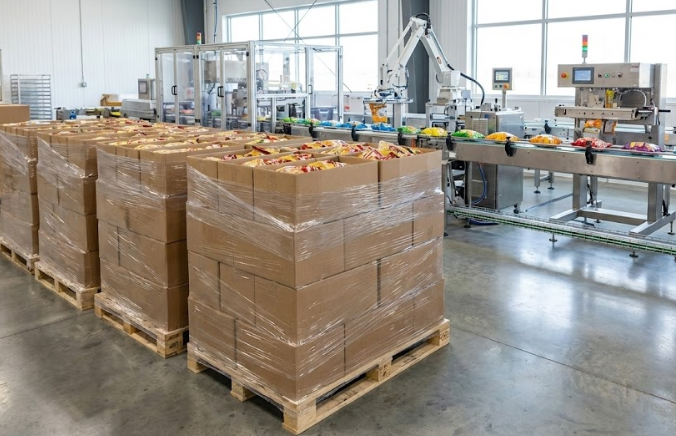
While this case involved a snack manufacturer, the same packaging challenges are commonly seen across nuts, popcorn, dried fruit, and similar granular food products.
Not every operation needs a fully automated line from day one—and that’s perfectly fine.
What matters is choosing packaging solutions that can evolve. Systems that integrate easily with existing equipment, allow future upgrades, and don’t require a complete factory overhaul offer far more strategic value than overbuilt solutions.
From our experience, the most effective automation projects are those that grow alongside the brand, rather than forcing the brand to grow into the machine.
If you’re facing similar packaging limitations and want to understand whether automation makes sense for your operation, we’re happy to review your current packaging process and share practical recommendations—no obligation, no sales pressure.
When should a snack company consider automated packaging?
A snack company should consider automation when manual packaging becomes a bottleneck—such as labor shortages, inconsistent bag quality, or inability to meet rising demand. Automation is often driven by growth rather than cost reduction alone.
Is automated packaging suitable for small or growing snack businesses?
Yes. Many automated packaging solutions are modular, allowing small and medium-sized snack companies to improve efficiency without heavy upfront investment. Semi-automatic or compact automatic systems are often ideal starting points.
What types of snack products work best with automated packaging machines?
Automated packaging is suitable for chips, nuts, popcorn, dried fruits, granola, and many extruded snacks. The key is selecting the correct weighing and bagging configuration for the product’s flow characteristics.
How does automated packaging improve consistency and quality?
Automation controls fill weight, bag dimensions, sealing temperature, and speed. This reduces human error, minimizes waste, and ensures uniform packaging—improving shelf appearance and brand consistency.
Can automated packaging systems handle different bag sizes and materials?
Most modern systems support multiple bag sizes and materials, including pillow bags, gusseted bags, and laminated films. This flexibility is essential for snack brands with diverse SKUs.
How long does it take to see ROI from packaging automation?
Many snack manufacturers see ROI within 6–18 months through labor savings, reduced waste, higher throughput, and improved order fulfillment. Proper system selection plays a critical role in accelerating payback.
Contact: LTC Bagging System
Phone: +8613337332946
E-mail: [email protected]
Add: Wenzhou, Zhejiang Province, China